

For every Maldivian citizen, the nation remains of paramount importance, underpinned by an unyielding rejection of external interference in domestic affairs. While self-proclaimed "friendly" states elsewhere exert influence and impose harsh measures on foreign governments, the island republic has chosen a distinct diplomatic path, strengthening international ties while asserting sovereign self-determination.
Moving past previous administrations defined by single-nation dependency or alliances forged without domestic consent, a new equilibrium has emerged through a ‘Maldives First’ doctrine. Implemented by President Dr Mohamed Muizzu, this policy, which explicitly excludes Israel, builds relations on an equal footing to secure maximum benefit for citizens.
“A foreign policy that resonates with the pulse and feelings of Maldivians is a foreign policy from which Maldivians will derive joy, prosperity, and contentment,” President Muizzu observed in a prior address, underscoring that the republic maintains close ties with Arab Islamic nations and all helpful partners, regardless of size, while rejecting war and cruelty.
As the administration nears its third year, regional cooperation with neighbouring states has visibly strengthened, defying critics who predicted deteriorating ties. Bilateral engagements have steadily expanded across defence, healthcare, technology, and religious cooperation, fostering closer relationships with historically distant partners.
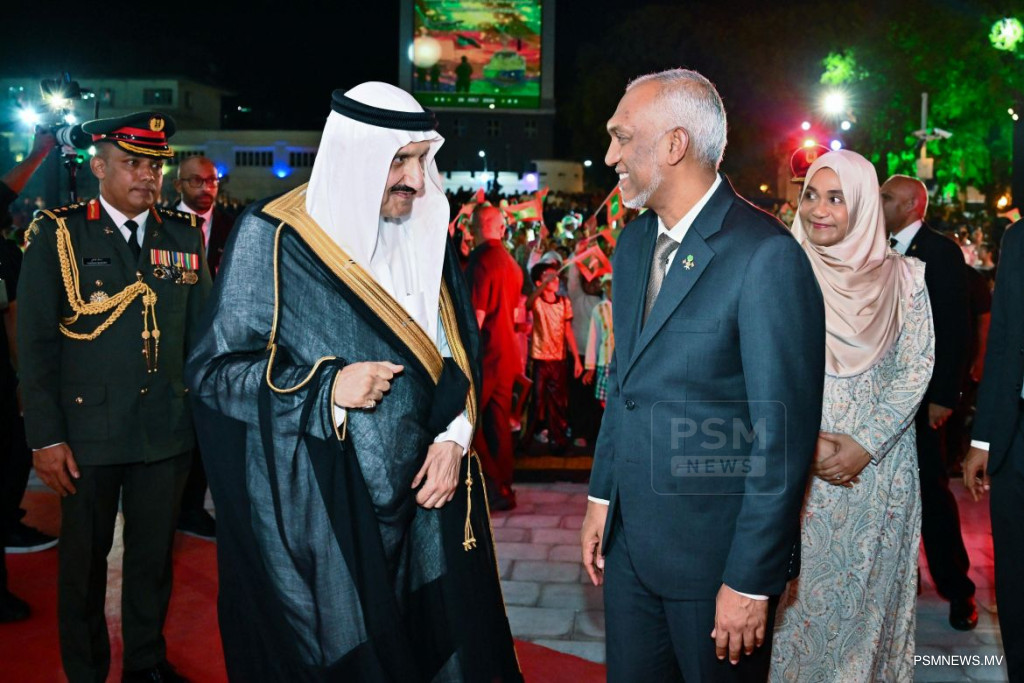
Highlighting this trajectory, President Muizzu noted that “113 diplomats, representing 43 nations and five United Nations agencies” attended this year’s Independence Day celebrations, marking a ten-year high.
For the 100 percent Muslim nation, inclusion in Saudi Arabia’s selective ‘Makkah Route Initiative’ for Hajj pilgrims, despite a modest quota, reflects deep respect from Islamic allies. Ultimately, widespread engagement demonstrates that a small state can command global respect without relying on a singular foreign patron.