

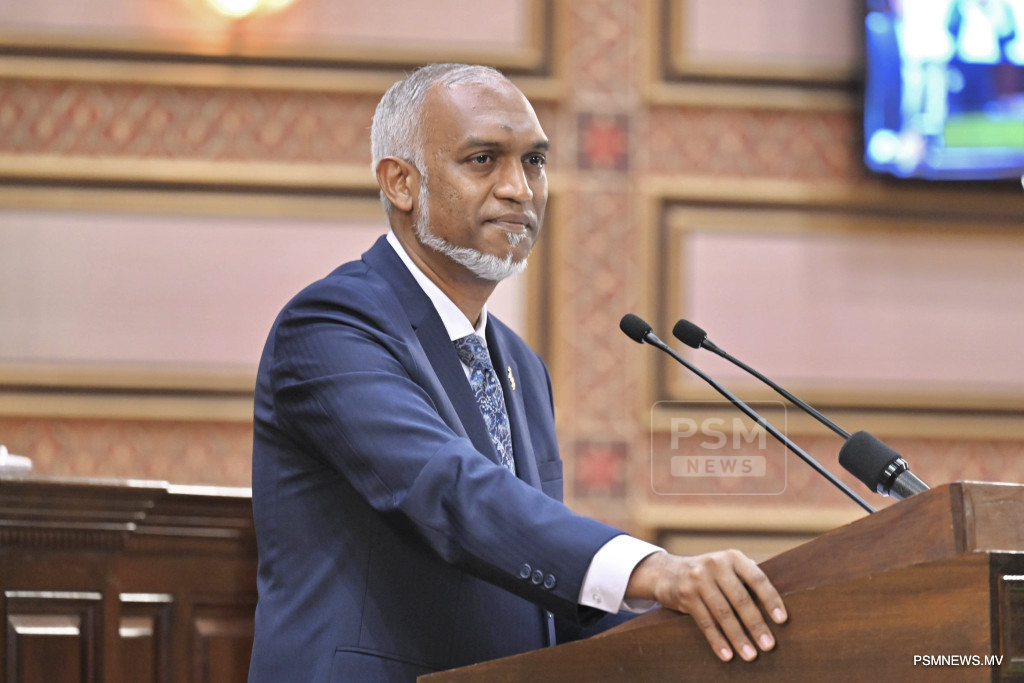
The opening sitting of the first term of the Maldives’ Parliament every year carries a significant weight that extends far beyond parliamentary formality. Enshrined in Article 84 of the Constitution, it is on this occasion that the President of the Republic addresses the nation through its legislature, delivering what has come to be known as the Presidential Address.
A defining moment in the Maldivian democratic calendar, one which is engaged by citizens from every strata of the society.
More than a procedural obligation, the Presidential Address serves as a national mirror and a compass. It offers an account of the country’s present condition, reflects on the progress made, and lays out the administration’s strategic vision for the year ahead. In doing so, it provides citizens with a rare, comprehensive insight into the direction in which their country is being steered.
This tradition is far older than the modern republic itself. Historical records trace its origins back more than nine decades, to 22 December 1932, when the Maldives convened the inaugural session of its first Parliament. On that day, the reigning monarch, Sultan Mohamed Shamsuddeen III Siri Kula Sundura Katthiri Bavana Mahaaradun, delivered an address then known as the Khutbatul Arsh. In it, the Sultan spoke candidly about the state of the nation, articulated his aspirations for its future, and underscored a principle that would echo through generations: the inviolable importance of national sovereignty and independence.
Those foundational themes have endured. From monarchy to republic, from the early days of representative governance to the complexities of the modern state, the island archipelegos leaders have continued to anchor their speeches in the preservation of independence, the welfare of the people, and towards the advancement of national progress.
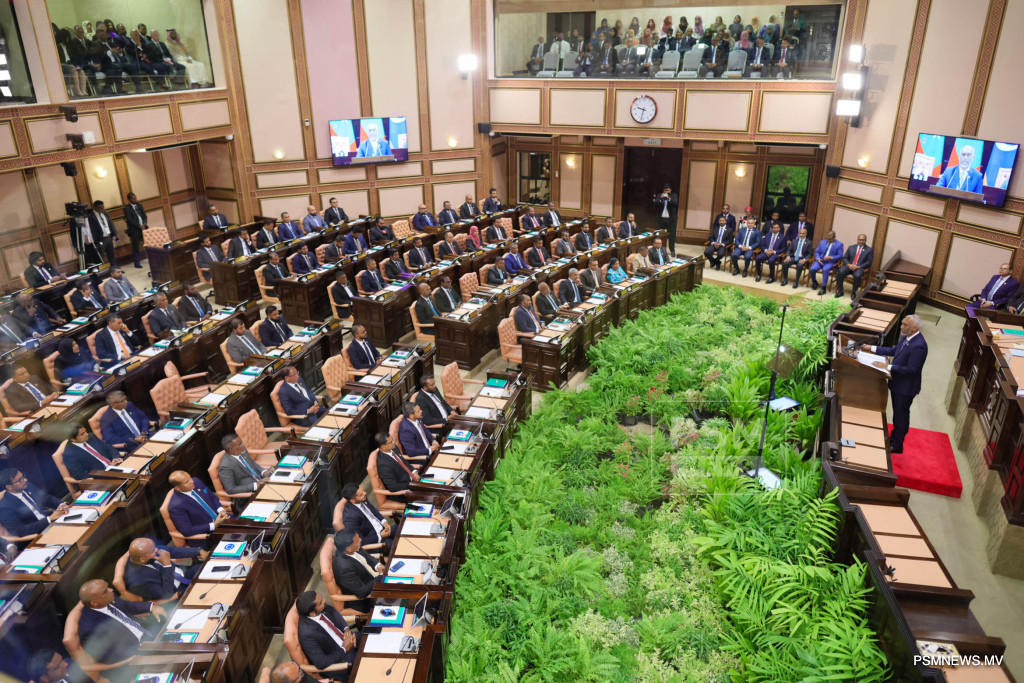
For the broder public, the Presidential Address remains one of the most keenly anticipated moments of the year. It is the principal platform through which the country’s leader, entrusted with the stewardship of the state, sets out a vision for shaping the collective future. Expectations are invariably high, as citizens listen for policies and initiatives that promise tangible improvements to everyday life.
Traditionally, these addresses have combined accountability with aspiration. Presidents have used the occasion to present a transparent assessment of national circumstances, to report on progress made against commitments announced in previous years, and to outline new initiatives aimed at economic development, social well-being, and institutional reform.
Today, President Dr Mohamed Muizzu delivers his third Presidential Address to the People’s Majlis. His addresses over the past two years have been marked by a deliberate continuity with the spirit of the nation’s first address nearly a century ago. Central to them has been a consistent emphasis on safeguarding the Maldives’ independence and sovereignty, alongside an expansive vision for development across key sectors of national life.
Many observers regard the President’s previous addresses as among the most comprehensive and forward-looking delivered by a Maldivian head of state. Notably, a substantial number of the initiatives and objectives announced in those speeches have since been translated into policy and action.
Against this backdrop, public anticipation is especially pronounced. As the nation listens once more, attention will turn to the roadmap laid out for the year ahead, including how the government intends to navigate the challenges of the present, capitalise on emerging opportunities, and advance the shared prosperity of the Maldivian people.
It is a moment of national reflection, a statement of intent, and a measure of the promises by which leadership is ultimately judged.