

Maldives has successfully doubled its renewable energy generation capacity over the past two years, marking a significant milestone in its journey toward energy independence and environmental sustainability.
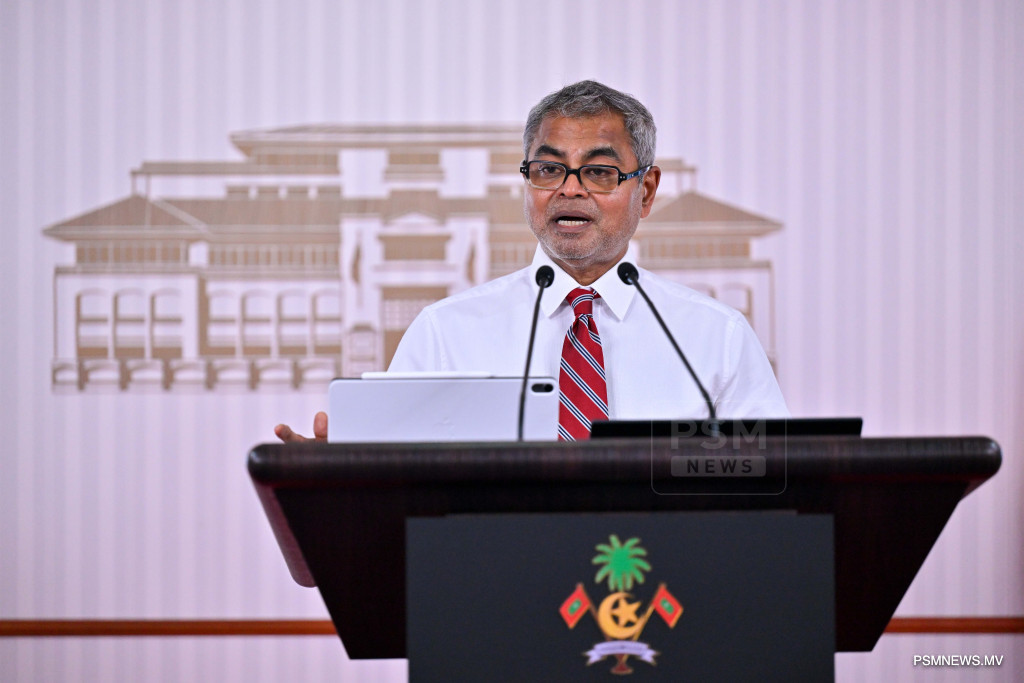
Minister of Tourism and Environment, Thoriq Ibrahim during a press briefing announced that the nation’s renewable output has surged from 53 megawatts (MW) in 2023 to 110 MW today—a 100 percent increase.
This rapid expansion is a critical part of the government's strategy to reduce its heavy reliance on imported fossil fuels, which currently account for 92 percent of the nation's electricity while the remaining eight percent is generated from solar power. Minister Thoriq highlighted the immense financial burden of this dependency, revealing that the nation spends a staggering USD 577.2 million annually on fuel imports, with an additional USD 149.2 million allocated for electricity subsidies.
The government’s ambitious target is to source 33 percent of its electricity consumption from renewable sources by 2028. To achieve this, a series of wide-ranging projects are underway.
Minister Thoriq detailed that 102 islands have already been upgraded with renewable energy systems, including a 28 MW solar photovoltaic (PV) system and 10 MW of battery storage. These installations are already saving an estimated 13 million liters of diesel and USD 12.3 million per year.
The Minister revealed that renewable energy systems are currently being installed across 101 additional islands. This next phase involves a massive 164 MW of solar PV capacity and 158 MW of battery storage, which is projected to save 76 million liters of diesel and USD 71.3 million annually upon completion.
A key initiative driving this transition is the ‘My Solar’ programme, which allows participants to finance new solar systems through the savings on their electricity bills, potentially reducing costs by up to 90 percent. Beyond solar, the Maldives is also pioneering other renewable technologies, according to the Minister.
Projects include a 100 kW wind energy system, a solar ferry, community ice plants powered by solar energy, and a pioneering 25 kW tidal electricity generation project, demonstrating a comprehensive and innovative approach to building a sustainable energy future, he added.
Tourism revenue to exceed government targets
During the press briefing, Minister Thoriq also revealed that tourism revenue for the year is set to surpass initial government forecasts.
Initial government estimates projected 2.24 million tourist arrivals would generate USD 5.45 billion in revenue by year's end. However, based on the current pace of arrivals, the government now forecasts revenue will reach around USD 5.55 billion, marking a significant 16 percent year-on-year increase, he said.
The upward trend is supported by strong arrival figures. As of Monday, 2.17 million tourists had visited the Maldives, a 10 percent increase from the 1.97 million recorded during the same period last year. This growth builds on the strong foundation of 2024, which saw a record breaking 2.05 million visitors contribute USD 4.79 billion to the economy.
To support this expansion and further develop the sector, the government has activated 6,665 new beds over the past two years and has initiated policies to expand tourism to previously undeveloped regions. The government's long-term ambition remains to increase annual tourism revenue to USD 6 billion.