

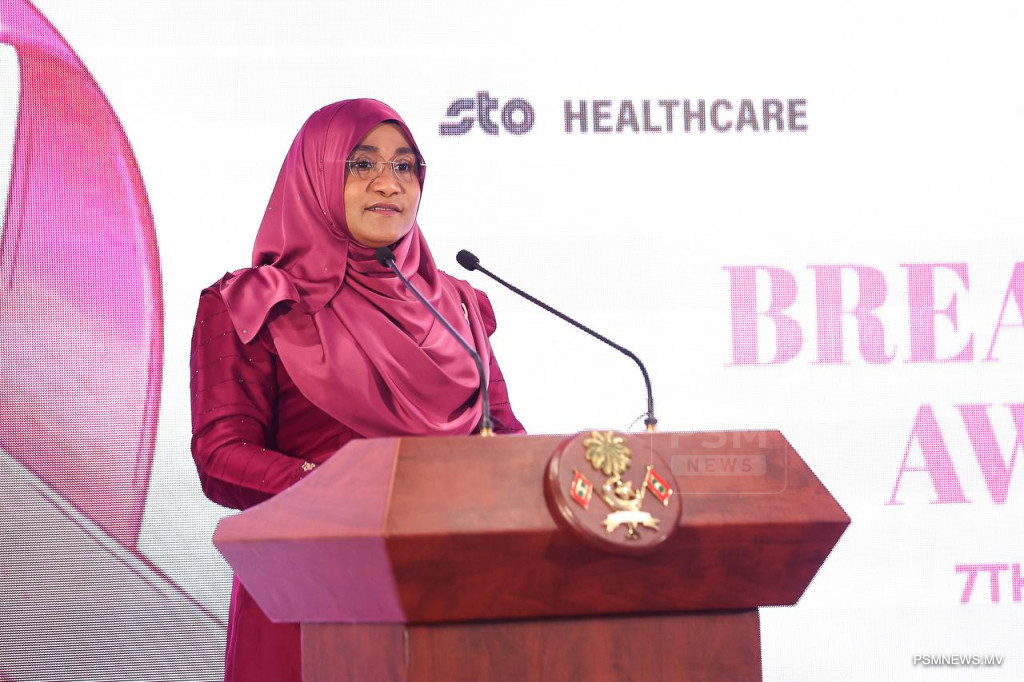
First Lady Sajidha Mohamed has urged women not to delay seeking medical advice or undergoing breast cancer screening, stressing that early detection can provide more treatment options and improve the chances of recovery.
She made the remarks at the opening of the 7th Annual Breast Cancer Awareness Symposium, held today under the theme “From Detection to Recovery: Optimising Breast Cancer Care.”
Addressing the symposium, the First Lady described breast cancer as an important health priority for the Maldives and encouraged women to remain alert to changes in their breasts and seek medical advice without delay.
She said early diagnosis can make a significant difference by allowing treatment to begin earlier and giving patients access to a wider range of treatment options.
The First Lady also stressed the need to strengthen the country’s diagnostic capacity through modern equipment and specialised expertise. She highlighted the potential of artificial intelligence to help identify subtle changes at an early stage, while emphasising the importance of developing the healthcare workforce to use such technologies effectively.
She further called for timely, coordinated and patient-centred care, saying women should receive clear information, dignity, compassion and emotional support alongside medical treatment.
Addressing the challenges of providing healthcare across the Maldives’ dispersed geography, First Lady Sajidha said distance should not determine the quality or timeliness of breast cancer care. She called for continued efforts to strengthen services nationwide, improve referral pathways and expand access to specialised treatment.
The First Lady also acknowledged women who have undergone or are currently receiving treatment, as well as those who have lost loved ones to breast cancer.
She stressed the importance of placing women at the centre of care and ensuring that those undergoing treatment are able to live with dignity.
Concluding her remarks, First Lady Sajidha urged women not to let fear prevent them from seeking medical advice or undergoing appropriate screening, emphasising that early detection can offer greater hope, more treatment options and a better chance of recovery.