

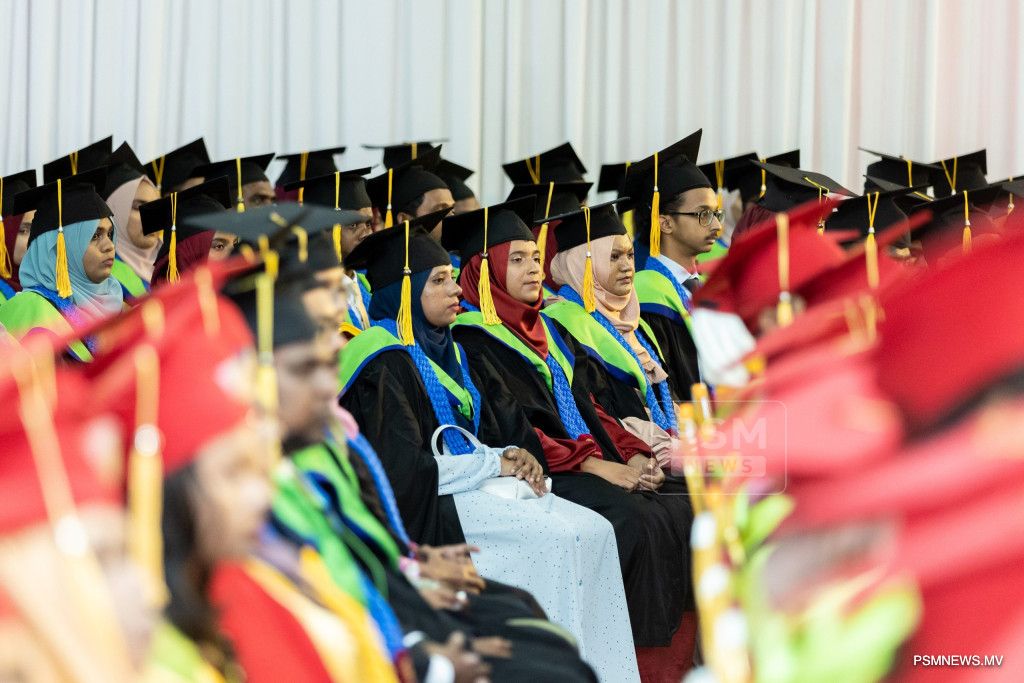
New regulations governing universities in the Maldives allow private colleges to register as universities after operating as colleges for 15 years.
Formulated under the Higher Education Act, the Regulation on the Registration and Operation of Universities in the Maldives sets out the period institutions must operate before becoming universities and the requirements they must meet. The regulation establishes uniform procedures for the registration, operation and dissolution of universities in the Maldives, while also setting standards for universities.
Under the regulation, an institution must have operated as a college for 15 years to qualify for registration as a university. An institution operating in another country must have operated for 10 years as a university recognised by that country's Government and must offer courses in three fields at levels ranging from bachelor's to master's degrees.
The courses will be considered established if the institution has offered them continuously for five years. It must also have at least 1,000 students studying at degree and master's degree levels, be included and ranked in an international university ranking, and have held membership in an association representing international universities for at least five years.
The institution must also have experience conducting research of an international standard. At least 10 per cent of its full-time academic staff must hold a PhD or have attained Level 10 of the national qualifications framework. The regulation also sets out requirements for registering an institution as a university of a foreign country.
Institutions seeking registration as a university must submit a proposal through a portal designated for this purpose by the Ministry of Higher Education, Labour and Skills Development. The Ministry must provide the applicant with written confirmation that it has received the application within two weeks of the proposal being submitted.
The Ministry must establish a five-member technical committee to evaluate proposals. The committee will comprise two experts in higher education, a senior official from the Ministry of Higher Education, Labour and Skills Development, a senior official from the Maldives Qualifications Authority (MQA) and a member from the finance sector. Although the committee consists of five members, the Ministry may appoint additional members if further technical expertise is required.
The Ministry must prepare an assessment report and reach a decision within three months of receiving the proposal. The regulation sets a fee of approximately USD 6,485 to register a university's main campus and also requires fees for registering additional campuses and learning centres.
Registering an additional campus or changing the building in which a campus operates will cost approximately USD 973, while registering a learning centre will cost approximately USD 195. Registering an outreach centre will cost approximately USD 162, while making any amendment to the registration will cost approximately USD 32. If the registration certificate is lost, obtaining a replacement will cost approximately USD 130.
The regulation further requires an institution to begin offering at least one PhD-level programme within two years of becoming a university.
Private colleges now have the opportunity to become universities under the new framework. At present, the Maldives has two universities: the Maldives National University and the Islamic University of Maldives.