

The Maldives spent a staggering USD 648.5 million on fuel imports last year—equivalent to 10 percent of the nation’s GDP—highlighting the urgent need to transition toward sustainable energy, Minister of Tourism and Environment Thoriq Ibrahim has said.
The funds, converted into foreign currency and paid abroad, underscore the country’s heavy reliance on imported diesel to power its residential, resort, and industrial islands.
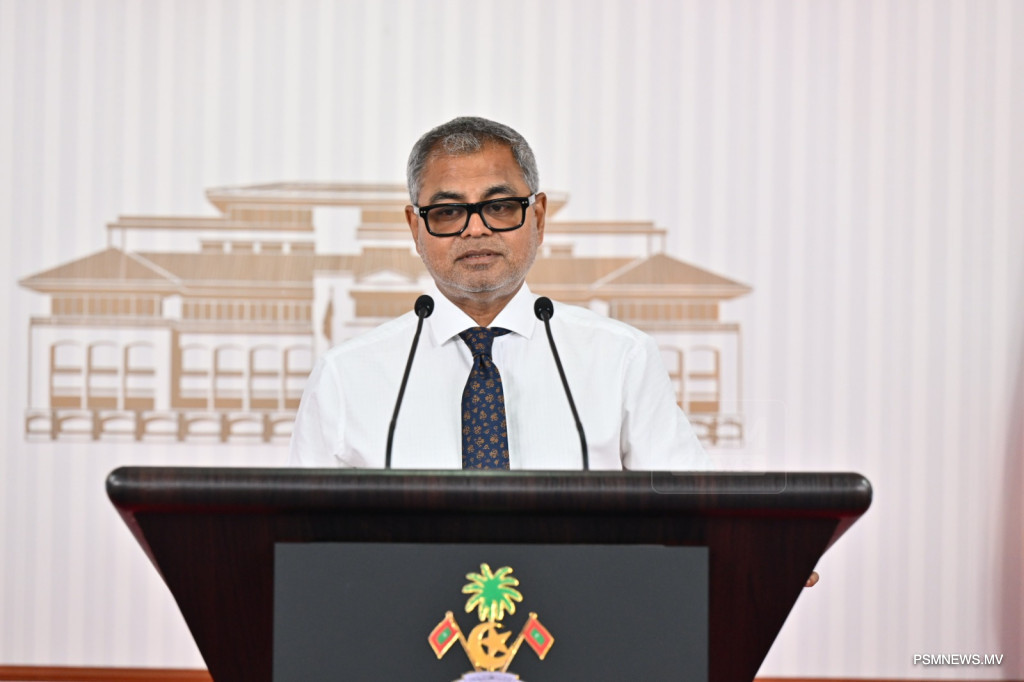
Speaking during a press briefing, Minister Thoriq revealed that the Maldives currently operates 310 MW of diesel-powered generators in residential areas, 298 MW in resorts, and 30 MW in industrial zones, requiring around 7,965 barrels of diesel daily—nearly 2.9 million barrels annually—just to maintain basic electricity supply. With similar consumption levels in the tourism sector, the nation faces mounting economic and environmental challenges.
Recognising the sustainability crisis, the government has intensified efforts to reduce dependency on fossil fuels and expand renewable energy capacity. Under the leadership of President Dr Mohamed Muizzu, the administration has officially released a comprehensive energy policy and a detailed energy roadmap to guide sector development.
While acknowledging that renewable sources cannot yet fully replace diesel, Minister Thoriq emphasised ongoing initiatives to generate 33 percent through renewable sources across the archipelago.
Key projects include deploying new generators, expanding electricity grids, and enhancing battery storage to stabilise renewable supply across the Maldives.
According to Minister Thoriq, to date, 157 new generators with a combined capacity of 115 MW have been delivered to various islands, significantly improving power reliability.
The government remains committed to achieving 24-hour electricity for all inhabited islands and reducing the nation’s carbon footprint through a resilient, diversified energy future, he added.